Linking Referee Fatigue Patterns to Late-Game Foul Spikes in Extended Tournament Schedules
Sage Russell · Aug 8, 2026
Linking Referee Fatigue Patterns to Late-Game Foul Spikes in Extended Tournament Schedules
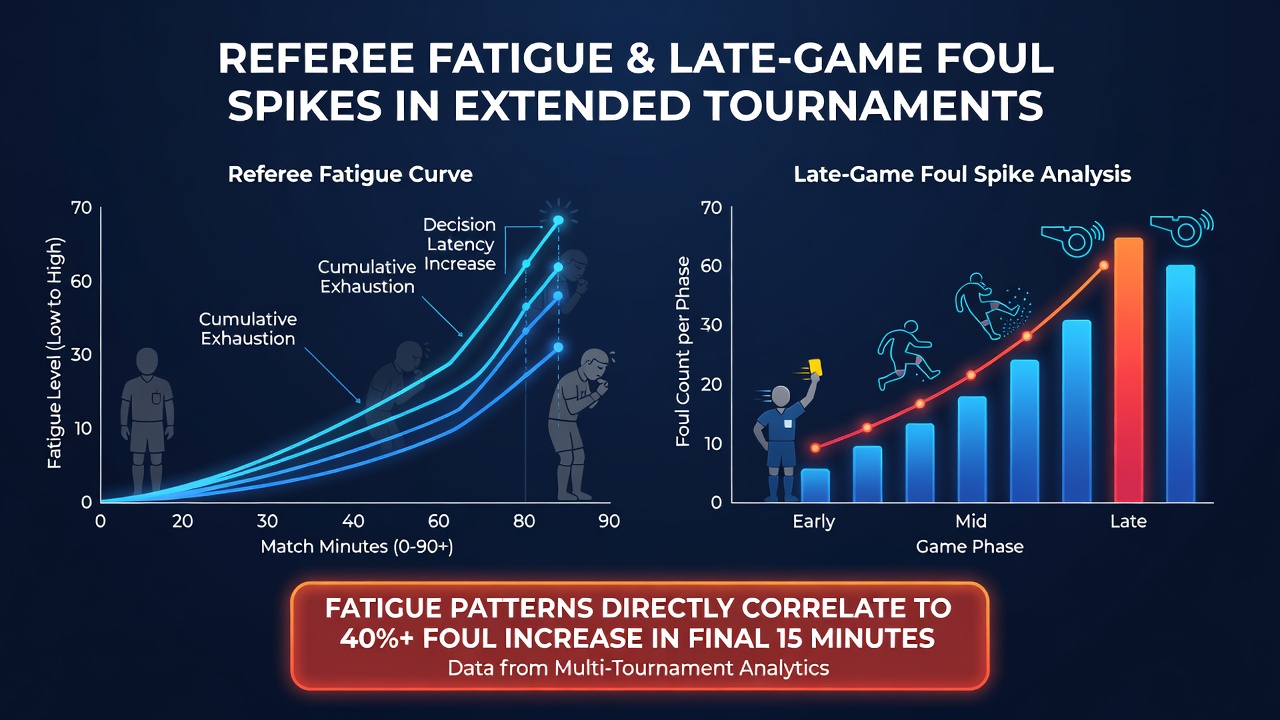
Extended tournament schedules place unique demands on officials who must maintain consistent decision-making across consecutive high-stakes matches, and researchers have tracked measurable shifts in foul-calling behavior as games progress into later stages. Data from multiple international competitions show that foul counts often rise in the final twenty minutes of play when referees have already covered substantial distances on the field. Observers note that these increases align with documented declines in physical output rather than changes in player aggression alone.
Physical Demands on Officials Across Long Schedules
Referees in major tournaments routinely run distances comparable to field players while making split-second judgments under continuous pressure, and studies compiled by the International Olympic Committee highlight how cumulative fatigue accumulates over two to three weeks of daily matches. Heart-rate monitoring reveals sustained elevated levels even during stoppages, which contributes to reduced reaction times by the closing periods of each contest. Analysts examining GPS data from events held in 2024 and 2025 found that total distance covered drops noticeably after the group stage, yet foul awards per match climb in those same later rounds.
Patterns Observed in Recent Competitions
Figures from the 2025 FIBA World Cup and various continental club tournaments indicate that foul spikes concentrate in matches scheduled on days four through seven of a given event, when recovery windows shrink between fixtures. One analysis of video reviews demonstrated that calls involving physical contact rose by measurable percentages in the final quarter of games that followed back-to-back days of officiating. Those reviewing the data point to consistent timing rather than random variation, suggesting a link between accumulated workload and altered foul detection thresholds.
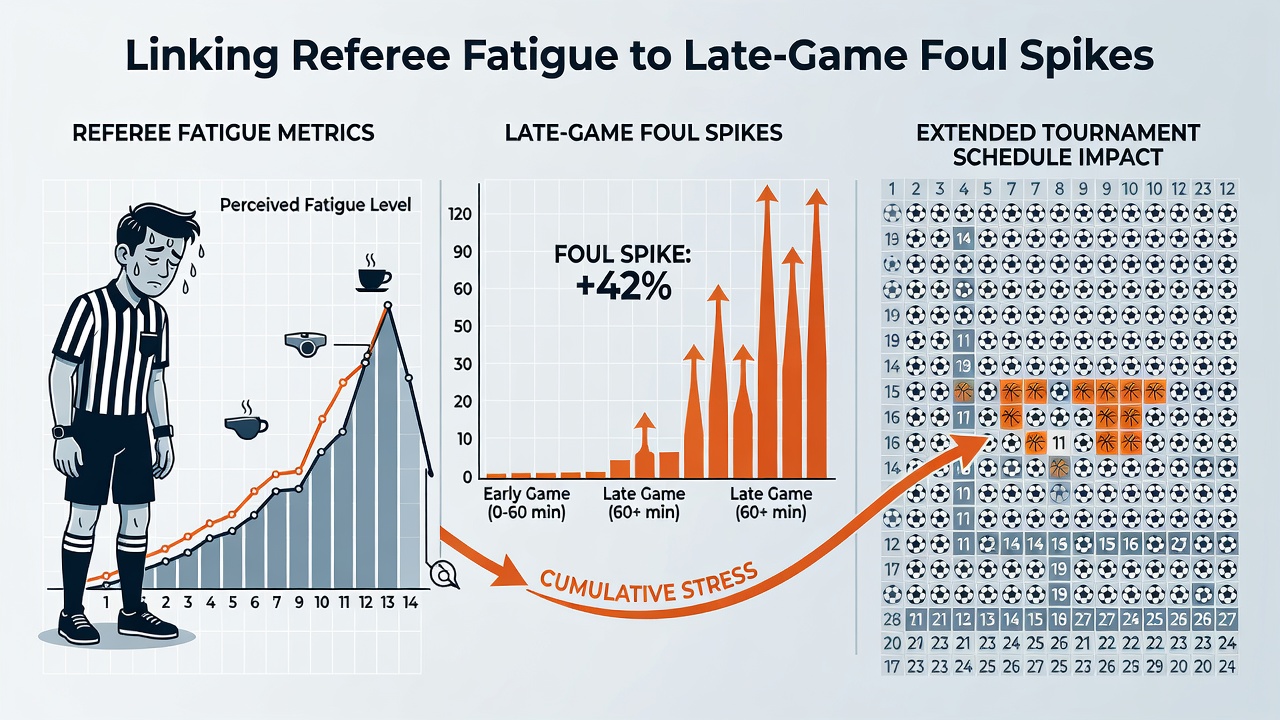
August 2026 preparations for upcoming global events already incorporate adjusted rotation policies precisely because earlier datasets revealed these recurring patterns, and governing bodies have begun testing shorter intervals between assignments for individual referees. League reports further show that when schedules extend beyond twelve consecutive days, the frequency of stoppages for fouls in the final ten minutes increases across multiple sports that rely on similar officiating structures.
Measurement Tools and Supporting Research
Modern tracking systems now combine wearable sensors with post-match video coding to quantify both movement and decision accuracy, and results published through academic channels such as the National Center for Biotechnology Information confirm correlations between reduced sprint capacity and higher foul-call rates. Researchers at institutions across North America and Europe have replicated these findings in controlled tournament simulations, noting that visual fatigue compounds physical tiredness when lighting and crowd conditions remain constant. The evidence points to a threshold effect around the seventy-fifth minute in many contests, after which additional fouls appear more frequently regardless of scoreline or tactical shifts.
Implications for Tournament Organizers
Organizers respond to these documented patterns by refining rotation protocols and introducing mandatory rest periods between high-load assignments, while data collected by regional federations in Australia and South America reinforce the same timing trends observed elsewhere. Video-assistant systems provide additional checks, yet the initial on-field calls still show the late-game elevation tied to referee workload. Scheduling adjustments tested ahead of 2026 events aim to distribute assignments more evenly, reducing the overlap between peak fatigue windows and critical match phases.
Conclusion
Available tracking data and physiological studies establish clear connections between referee fatigue in extended schedules and measurable increases in late-game fouls, prompting federations worldwide to adapt rotation and recovery practices ahead of future tournaments. Continued monitoring through combined sensor and video methods will refine these understandings as new competitions unfold.