Recovery Rhythms: Aligning Football Player Returns and Tennis Injury Timelines with Market Line Movements
Dana Ludwig · Oct 23, 2026
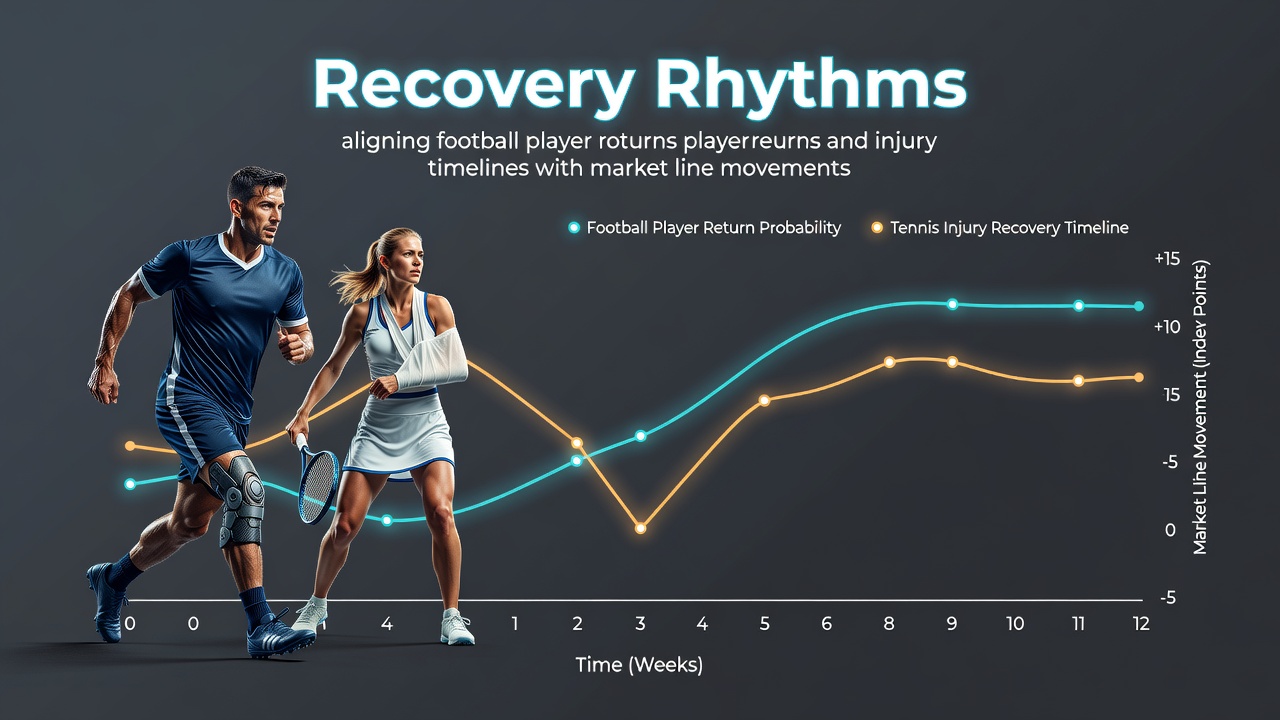
Recovery Rhythms: Aligning Football Player Returns and Tennis Injury Timelines with Market Line Movements
Football clubs and tennis federations track recovery timelines with increasing precision, and those patterns connect directly to shifts in betting market lines when players return or sit out. Data from league medical reports shows that anterior cruciate ligament repairs in footballers typically require six to nine months before full competitive minutes resume, while hamstring strains often clear in four to six weeks depending on severity grades recorded by club physicians.
Football Return Patterns and Line Adjustments
Premier League and Bundesliga injury logs indicate that central defenders coming back from knee procedures tend to see their teams concede fewer set-piece goals after the third match of reintegration, a trend that correlates with closing line movements on total goals and handicap markets. Observers note how sharp money often moves early when a star striker logs full training sessions two weeks ahead of a fixture, pushing over lines downward because expected goal outputs rise within the first 60 minutes of play.
Studies from the Australian Institute of Sport reveal that players who complete progressive loading programs without setbacks return at higher sprint intensities than those rushed through rehabilitation, and bookmakers adjust player prop markets accordingly within 48 hours of confirmed squad inclusion. In October 2026, several top-flight sides face congested schedules where multiple midfielders reach the 180-minute threshold post-injury, creating measurable drifts in both team totals and individual assist lines.
Tennis Injury Timelines and Surface-Specific Markets
Tennis recovery data from the ATP and WTA medical boards shows that wrist extensor issues require eight to twelve weeks for serve speeds to stabilize, whereas ankle sprains allow return to competition in three to five weeks when players follow structured proprioception protocols. Line movements in Grand Slam and ATP 500 events frequently tighten on underdog prices once a player completes two full practice sets without reported discomfort, according to historical odds archives maintained by major exchanges.
Researchers tracking clay-court specialists find that knee inflammation cases produce wider spreads in early-round matches because movement recovery lags behind pain-free hitting sessions, while hard-court events show faster normalization of game totals once medical clearances are issued. One longitudinal review covering 2018 through 2025 documented that players returning from abdominal strains post-Australian Open often see their win probabilities revised upward by three to five percentage points in the following European swing.
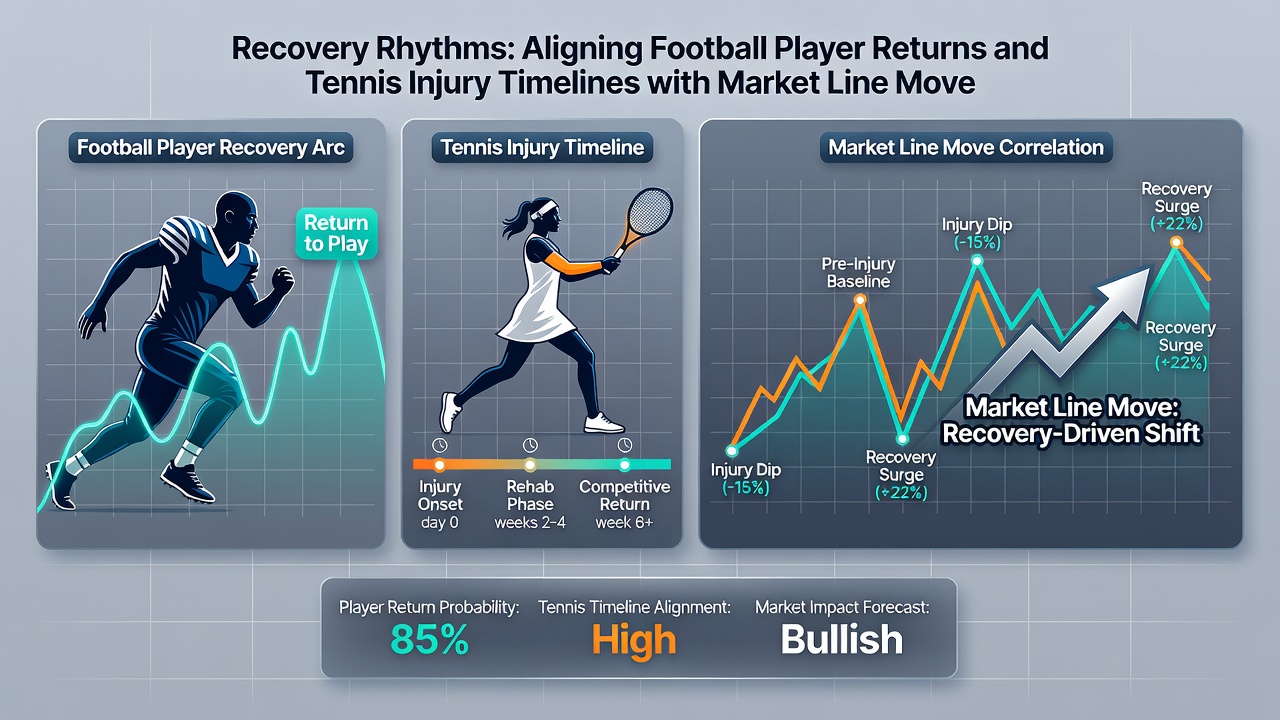
Cross-Sport Data Overlaps in Market Behavior
Betting operators monitor both football squad announcements and tennis withdrawal lists simultaneously because correlated timing creates layered value across accumulator products. When a key football midfielder and a top tennis seed both clear injury protocols in the same 72-hour window, exchanges record accelerated movement on correlated parlays linking the two sports.
Figures compiled by the National Institutes of Health sports medicine division highlight that athletes who log objective GPS and heart-rate variability metrics during return-to-play phases experience fewer re-injuries, and these reduced risk profiles translate into steadier performance benchmarks that markets price more accurately after initial volatility. In October 2026, the overlap between early-season football returns and indoor tennis swing creates repeated instances where opening lines undervalue or overvalue reintegrated athletes until the first competitive outing confirms fitness levels.
Monitoring Protocols and Line Stability
Clubs and player management teams release graduated return updates through official channels, yet sharp bettors cross-reference these statements against training-ground footage and medical podcast commentary to anticipate line corrections. Evidence from European football federations demonstrates that defensive units regain clean-sheet rates within four matches of a centre-back's return when the player averages over 85 percent of pre-injury sprint distance, prompting under-2.5 goal lines to compress accordingly.
Tennis physios report that serve percentage recovery follows a predictable curve after elbow procedures, with 90 percent velocity restoration occurring around week ten for most baseline players, and this benchmark frequently aligns with tightening spreads on game and set totals in subsequent tournaments. Market analysts track these curves because deviations from expected timelines generate the largest closing-line-value opportunities across both sports.
Conclusion
Recovery rhythms in football and tennis produce measurable effects on betting market lines when medical timelines and performance benchmarks align with fixture schedules. Data from multiple sports science sources confirms that structured reintegration protocols reduce variance in early-match outputs, allowing lines to stabilize once initial uncertainty passes. Observers who follow official injury reports alongside objective performance metrics can identify the windows when market adjustments most closely track actual readiness levels across both codes.