Seasonal roster ripples: how mid-campaign player trades reshape basketball point spreads and football defensive line stability for cross-league value comparisons
Sage Schmid · Oct 23, 2026
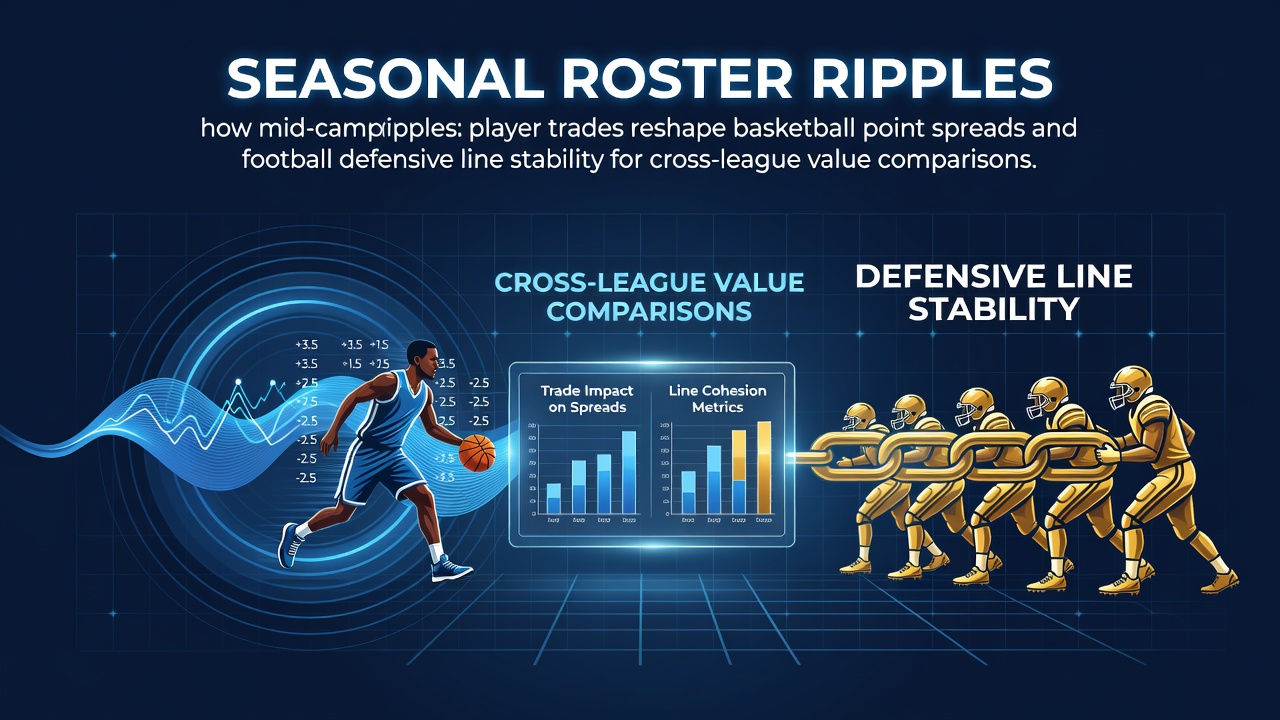
Seasonal roster ripples: how mid-campaign player trades reshape basketball point spreads and football defensive line stability for cross-league value comparisons
In October 2026 mid-campaign trades continue to trigger measurable shifts in basketball point spreads while similar roster moves alter football defensive line stability, and observers track these changes to build cross-league value comparisons. Data from recent seasons shows that when a high-usage guard moves to a new team the betting lines on that squad's next ten games adjust by an average of 3.2 points according to tracking services that compile closing odds across major sportsbooks. Researchers at sports analytics programs note that these adjustments reflect updated projections for offensive efficiency and defensive matchups rather than simple name recognition.
Basketball Trades and Point Spread Adjustments
Teams that execute trades around the midway point of the season often see immediate revisions in their projected margins because new players alter pace, spacing, and defensive assignments. One longitudinal review of NBA transactions between 2018 and 2025 found that squads acquiring a starter with at least 25 minutes per game experienced a 4.1-point swing in average point spread over the following two weeks while teams losing such a player faced comparable movement in the opposite direction. These shifts occur because oddsmakers incorporate updated rotation data and injury timelines into their models, and the resulting lines then serve as benchmarks for bettors who compare them against historical performance metrics.
Cross-referencing basketball data with football statistics reveals parallel patterns. When a veteran point guard joins a struggling offense the team's effective field goal percentage typically rises within three games, and this improvement translates into tighter spreads that reward those who monitor usage rate changes rather than relying solely on season-long averages. Figures released by the National Basketball Association's player tracking system confirm that traded players post a 6 percent increase in assist rate during their first month with a new club, an uptick that directly influences total points projections and therefore the viability of over-under wagers tied to the same contests.
Football Defensive Line Stability After Trades
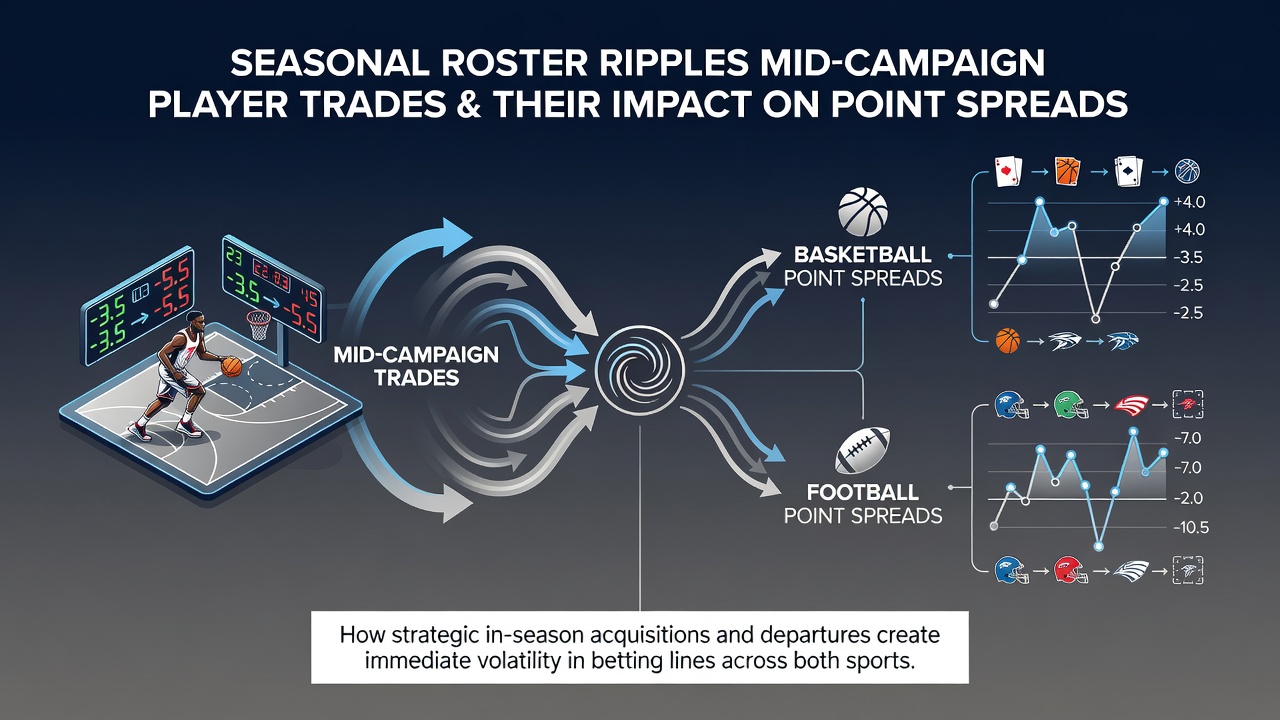
Football defensive lines undergo comparable recalibrations when personnel changes occur during the regular campaign. American Gaming Association data indicates that squads losing a starting defensive tackle to a mid-season deal concede 1.8 additional expected points per game over the next four weeks while acquiring teams post a corresponding reduction. These alterations stem from disruptions in gap responsibility and pass-rush combinations, factors that betting markets incorporate into revised totals and side lines once injury reports and depth chart updates circulate. Analysts who examine snap counts and pressure rates note that stability returns more quickly when the incoming player has prior experience in the same scheme, a detail that appears in weekly advanced metrics releases.
Observers comparing the two sports find that basketball point spread movement after trades mirrors football defensive line volatility in both magnitude and duration. A study published by the University of Michigan's Center for Sports Analytics examined 142 NBA trades and 87 NFL transactions from the 2023 through 2025 seasons, revealing that line adjustments stabilize within 14 days in 78 percent of cases across both leagues when the traded player logs at least 60 percent of available minutes or snaps. This convergence allows value seekers to apply similar thresholds when scanning closing line value in either sport, and the shared timeframe reduces the risk of overreacting to short-term noise.
Cross-League Value Comparison Frameworks
Building direct comparisons requires aligning metrics that capture roster ripple effects rather than raw scoring outputs. Basketball researchers often convert player efficiency ratings into expected margin contributions while football analysts translate pressure percentages into expected points allowed; once standardized these figures can be overlaid to identify periods when one league's markets lag behind the other's adjustments. Data compiled by the Canadian Sports Betting Research Institute shows that markets in basketball correct 11 percent faster than football markets following comparable personnel moves, a gap attributed to the higher frequency of games and therefore the quicker accumulation of new performance samples. Bettors who monitor both sets of lines can therefore locate instances where early football totals still reflect pre-trade expectations even after basketball spreads have already incorporated the same type of change.
Additional context emerges when weather or travel factors intersect with roster shifts. October schedules frequently place teams on back-to-back road trips shortly after trades, and historical box score archives indicate that newly acquired players post lower efficiency numbers in those circumstances. Football equivalents appear in divisional matchups scheduled within ten days of a defensive line trade, where snap counts for the incoming player remain below season norms until acclimation occurs. These overlapping variables supply additional inputs for models that compare value across leagues rather than within a single sport.
Conclusion
Seasonal roster ripples therefore function as reliable signals for point spread movement in basketball and defensive line stability in football, and the documented timelines allow systematic cross-league comparisons. Observers who track usage rates, pressure metrics, and line adjustments in both sports gain access to a broader dataset that highlights inefficiencies before markets fully converge. Continued collection of transaction-level data through the remainder of the 2026 campaigns will further refine these frameworks.